It’s been sitting hidden in plain sight for the past 53 years: a ghost sign above a Newtown shop which provides a valuable link to Sydney’s jazz boom and entertainment scene of the 1960s.
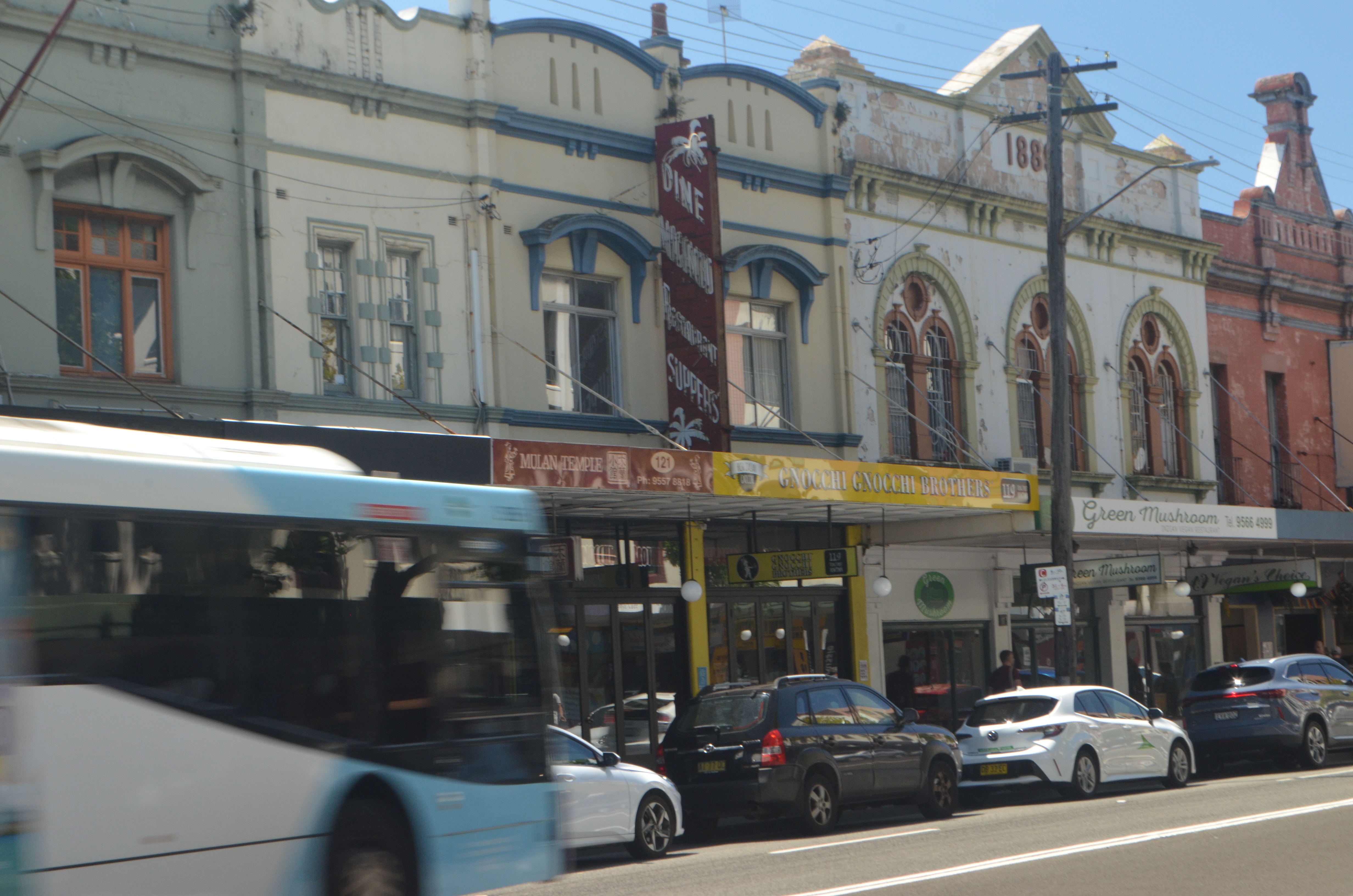
The Mocambo jazz club sign at 119 King St is passed by tens of thousands of cars and countless pedestrians each day. But precious few of these people would either notice the sign, or know its fascinating back story.
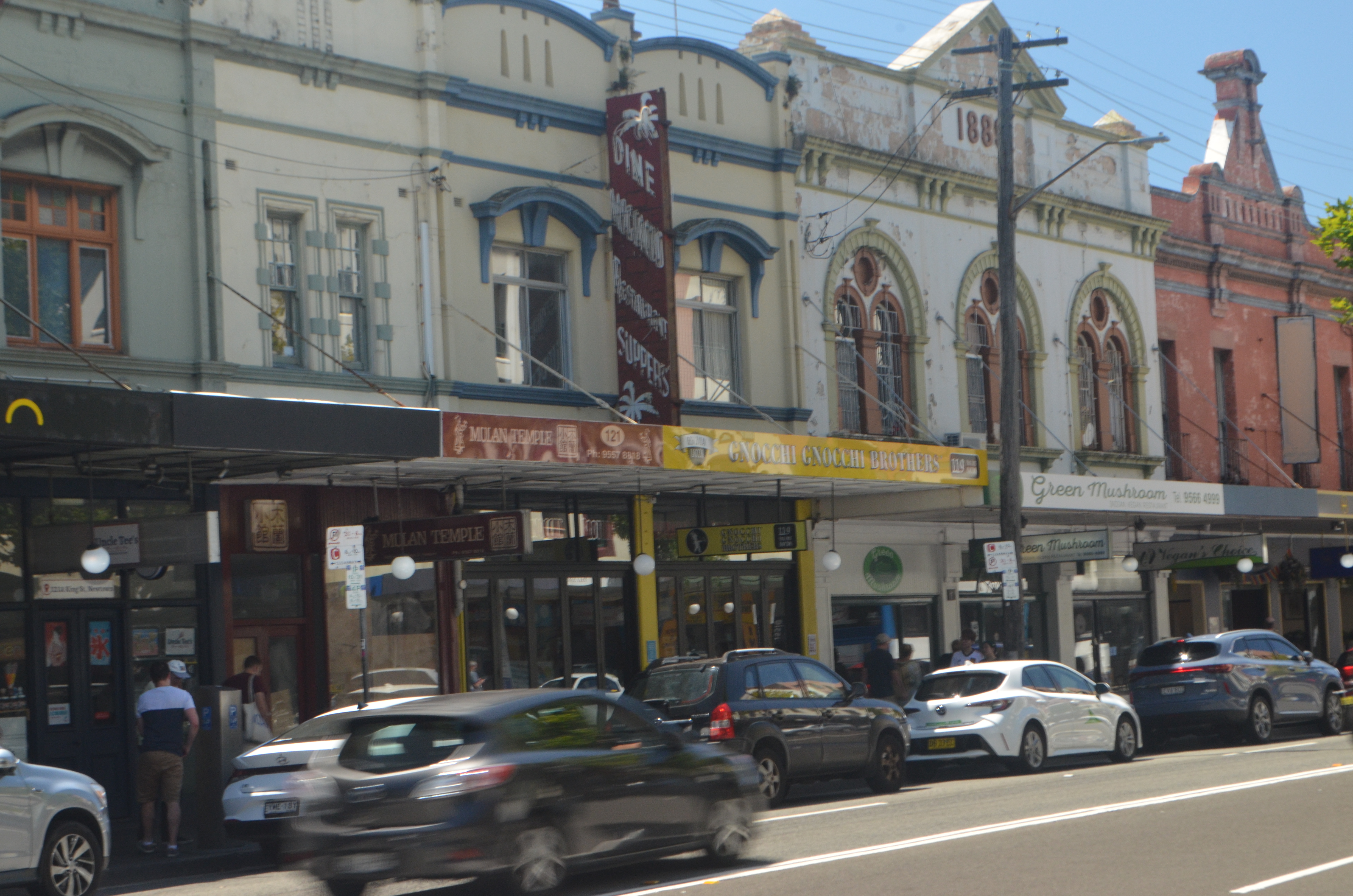
The Mocambo sign is passed by tens of thousands of motorists each day
In general parlance, the word mocambo actually refers to “a type of village-sized community composed mainly of runaway slaves in colonial Brazil”.
However, in the jazz and entertainment world, the word is forever linked to the Hollywood club Mocambo, known as the go-to dusk-to-dawn nightspot which, between 1941 and 1958, attracted A-list stars such as Marilyn Monroe, Clark Gable, Errol Flynn and Humphrey Bogart.
The huge amount of publicity given to this club, often in the form of magazine spreads of stars enjoying its facilities, no doubt inspired some Sydney entrepreneurs to try their luck setting up an establishment by the same name.
And so it was in September 1957 that a development application was lodged for 119 King St, seeking “use of premises as coffee lounge & restaurant. W. Vayda. C. Cameron & J. Dreese”.
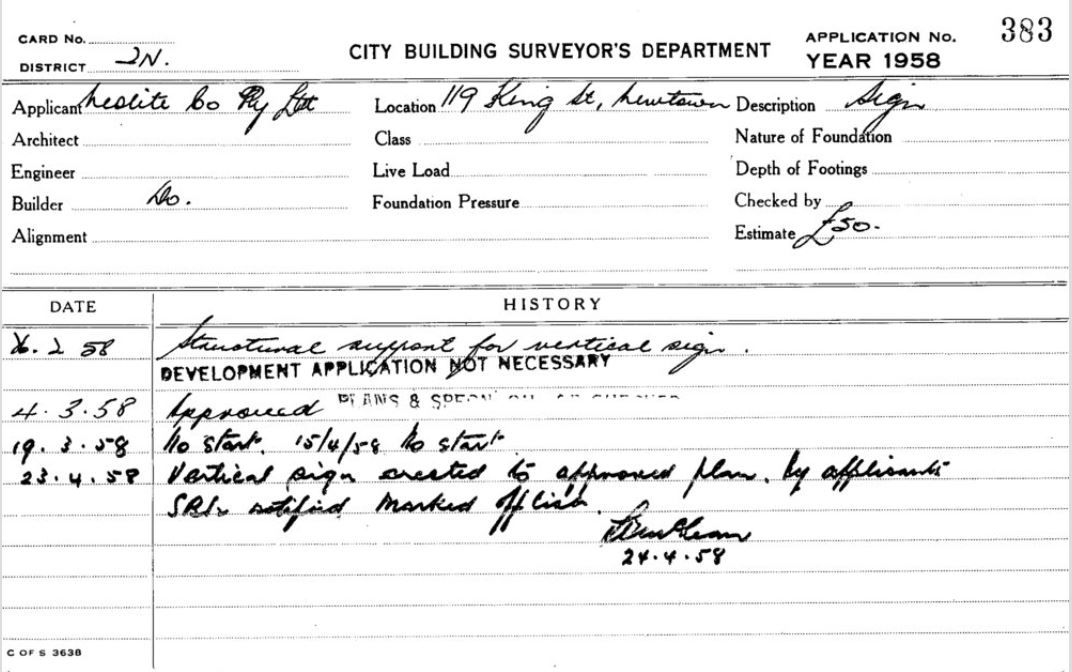
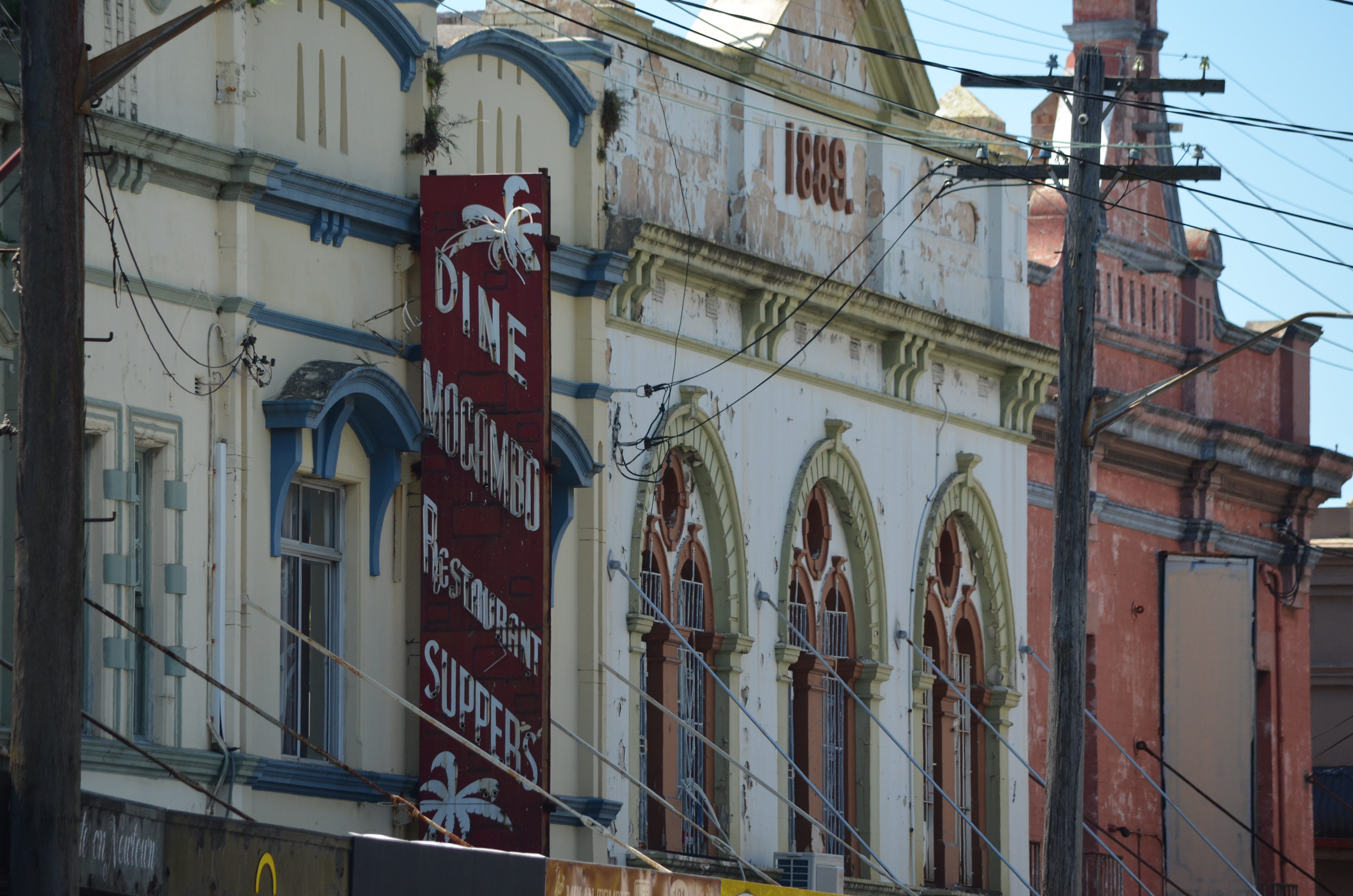
Soon after, City of Sydney Council records show a vertical sign was installed. This sign, with the words “Dine…Mocambo…Restaurant…Suppers” and two palm tree icons, remains there to this day (although sadly the neon struts no longer work).
City Council records of the installed Mocambo sign
Illuminated at night, the sign would have no doubt caught the attention of motorists as they travelled through Newtown North, towards the city.
Close up of the Mocambo sign
In 1958, the club advertised in the Sydney Morning Herald as offering “excellent cuisine, pleasant modern atmosphere”. It was listed among many of Sydney’s other restaurants cum nightspots, with exotic names such as Montemartre (at St Leonards), Riviera (at Ashfield) and let’s not forget “Oyster Bill” Skelsey’s at Sylvania (worth a blog at another time!).
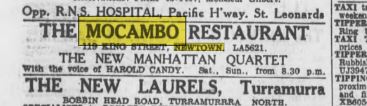
By 1959, Newtown’s Mocambo also began to advertise the regular appearance of the New Manhattan Quartet – suggesting a switch from cuisine towards music.
It’s around this time that the Mocambo became associated with proprietor George Akritas and the start of what’s been called Sydney’s 1960s jazz boom, as Sydney moved away from large social dances at town halls and towards performances at individual private venues.
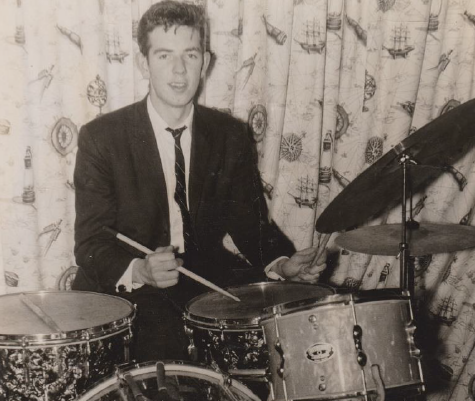
Drummer John Pochée pictured at the Mocambo circa 1957-58
Guitarist Peter Boothman, who passed away in 2012, has written the most detailed account of the Mocambo club.
“The surroundings at the Mocambo were unusual to say the least,” Boothman wrote in 2008.
“Proprietor George Akritas had installed a decor that could only be described as pseudo South Sea Island.
“Floor to ceiling columns were installed with fish tanks containing live tropical fish, real seashells were stuck to the walls and an ultra violet light was turned on from time to time.
“This light had the unfortunate side-effect of highlighting any dandruff that happened to be sitting on the shoulders of customers wearing dark coloured coats.
“The decor sounds awful I know, but in fact it was tastefully done and really not too far over the top, and it certainly did create an interesting atmosphere in the place.
“To show that he too had a bit of the creative artist in him, George Akritas would turn on and control a disco-type mirror ball at the end of each set, when the band would play one of their special arrangements such as Anitra’s Dance or Cubano Chant.
“Many Sydneysiders got their first taste of jazz at this small inner-city restaurant and over time a lot of well-known Sydney musicians played there in various groups.
“This venue was well attended, and a lot of people would drop in to hear the jazz after a night out at a city cinema. It was not unusual to find a queue of people outside waiting to get in.”
The decor sounds awful I know, but in fact it was tastefully done and really not too far over the top, and it certainly did create an interesting atmosphere in the place.
Peter Boothman
However, by the last 1960s, musical tastes had changed towards progressive rock, and funk and soul music, and jazz found itself looking at little passe. The Mocambo closed as a jazz venue in or around 1969, as did two other well-known jazz venues – the El Rocco at Kings Cross and the Musician’s Club in the city.
For a short period in late 1969, the Mocambo then advertised that it was offering “go go dancers every night this week…no cover charge”.
Boothman writes that the change was hard for Akritas to handle.
“When the Mocambo ceased to be a jazz venue in the late 60s, George Akritas retired to his flat upstairs and put the place in the hands of a manager,” he wrote.
“A story has been told that the elderly George came downstairs to the restaurant one night, saw a pop band with scantily clad dancing girls performing on stage and immediately dropped to the floor and died of a heart attack.
“That could possibly be an urban myth, but the fact remains that George Akritas loved the music and his little restaurant in Newtown turned out to be an important milestone for Sydney jazz.”
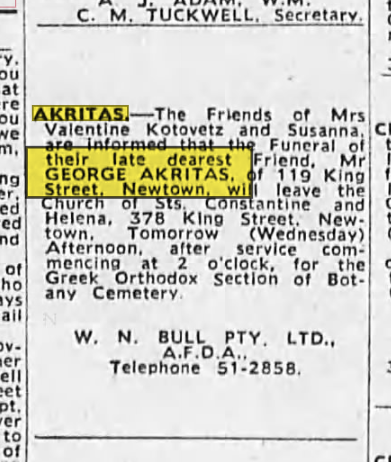
There could be truth in this story, as the Sydney Morning Herald advertised an obituary notice for Akritas on 9 December 1969, just as the Mocambo switched from jazz to disco.
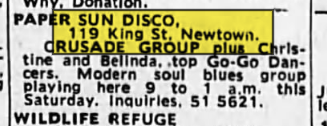
By 1970, the venue name had changed to the “Paper Sun Disco” where (according to advertising) one could find go-go dancers and “modern and soul blues”.
And since this time, the Mocambo sign has been an official “ghost sign”, referring to a business which no longer exists.
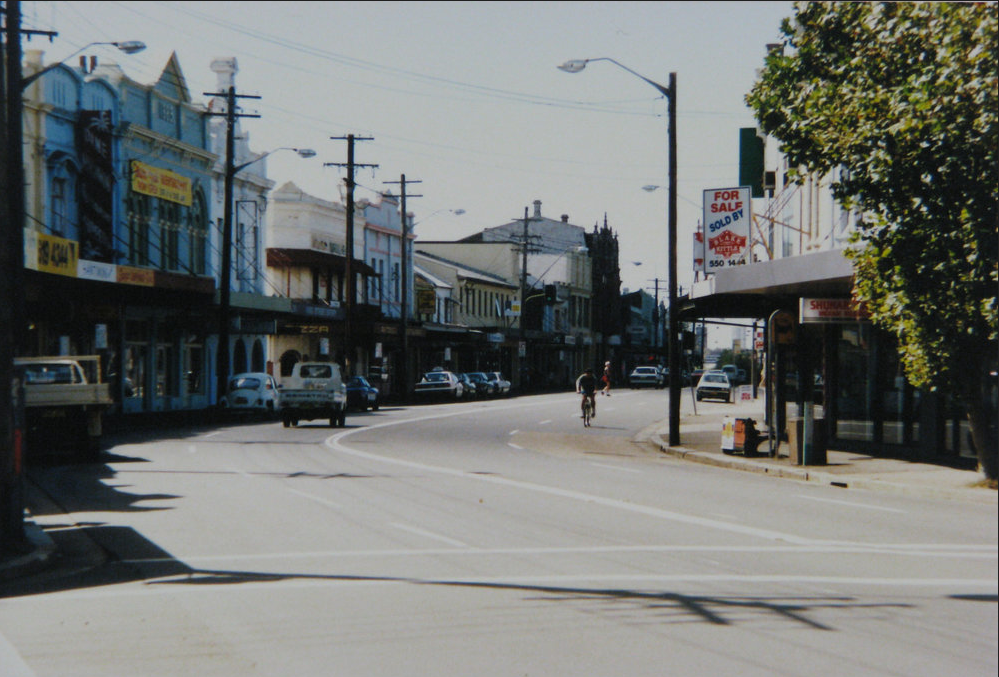
The Mocambo sign can be seen in the top left of this 1991 photo of King St, Newtown
The sign has sat above its shop awning – unloved, untouched and forgotten – as 119 King St has undergone ongoing changes in tenancies.
Now the site is home to a gnocchi restaurant. When I lived in Newtown from 2000-2008, I recalled the site as the home to the Asakusa Japanese restaurant.
Despite its age and obvious neglect and redundancy, the structure and paintwork still appears to be in reasonable order and it’s still easy to make out the sign’s words. It’s just that the sign’s neon tubes are now broken and no longer working.
In the case of the Mocambo sign, it’s probably been left in place because the shop frontages are subject to ongoing heritage protection.
The Mocambo sign is unlikely to be noticed by most of the tens of thousands of people who pass through King St each day
Signs remain important and much-loved markers to a site’s or suburb’s past, long after the use referred to in the sign has gone.
While the Mocambo sign may be mostly ignored by the hordes of people who move around Newtown each day, it remains a valuable reminder of a long-forgotten and exotic era in the city’s history.
Discover more from Changing Sydney
Subscribe to get the latest posts sent to your email.


 Changing Sydney
2 Comments