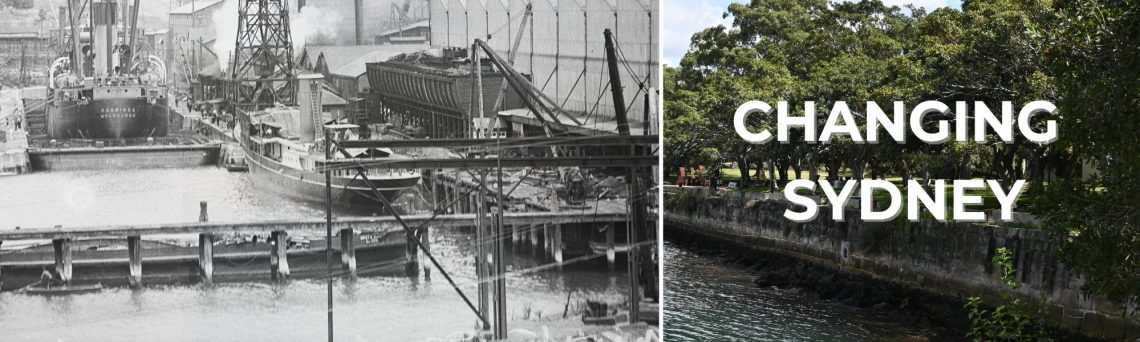
The Sydney CBD has seen constant change.
In just over 200 years, it’s been transformed from a tent-filled colonial outpost in scrubby bush to a global city with tall skyscrapers. Arguably, the biggest level of change came after the city’s 150 feet building height limit was scrapped in the late 1950s.
However, amid all this change, there are many visual reminders of what used to be.
If you take your time, and look closely, you can find many signs referring to businesses which are no longer in place. These ghost signs are valuable and tangible heritage assets.
Here’s a list of some of the city’s best ghost signs.

2KY sign
2KY was one of Sydney’s earliest commercial radio stations, having been established by the NSW union movement in 1925. It was known for its pro-union commentary and racing coverage.
2KY is no longer a feature on Sydney’s AM radio scene, with its 1017 frequency now used by Sky Sports Radio (which acquired 2KY in 2001).
Despite this, a large 2KY sign is located on the rear of the Labour Council of NSW building at 377 Sussex St. This sign faces west and can be best seen from the southern end of Darling Harbour, near the entrance to the Chinese Garden of Friendship.
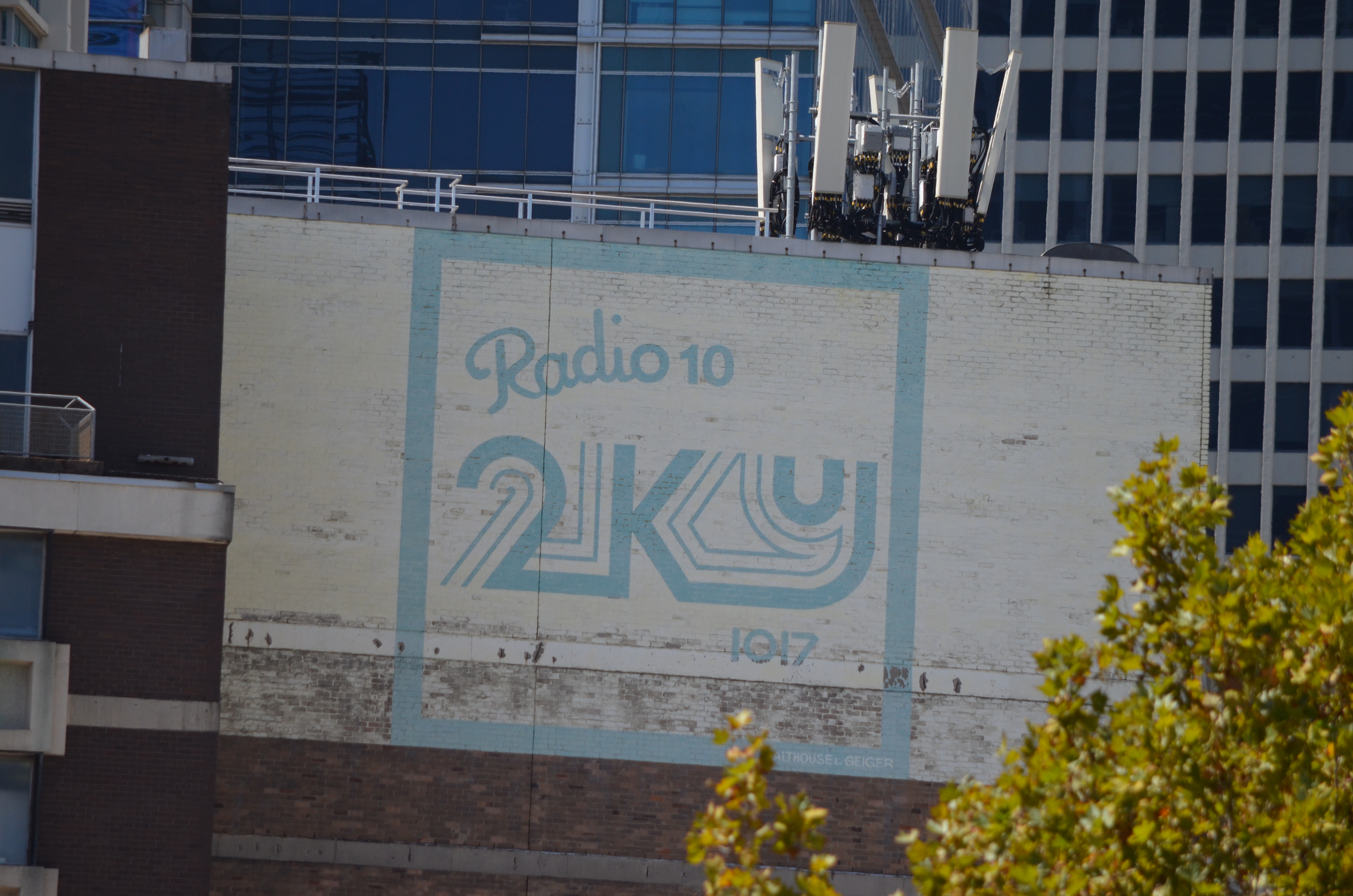
The sign’s view corridor is partially protected by the fact the historic and low-scale Trades Hall building is located to the west of the office building. Given Trades Hall is heritage-protected, it is unlikely to be developed and therefore the sign will remain able to be seen.
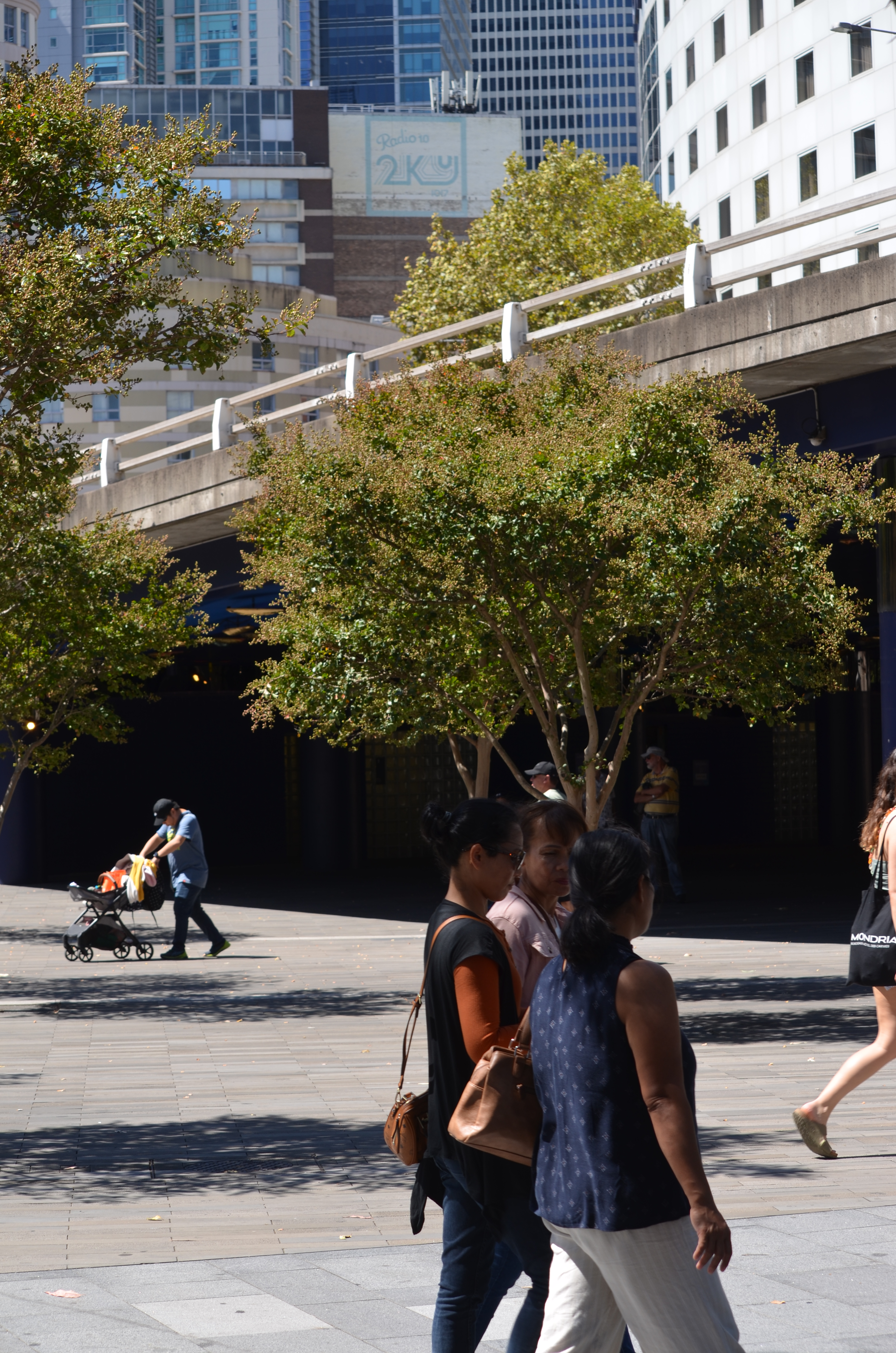
Based on City of Sydney Council records, the Labor Council of NSW building was constructed around 1971, and the station moved into the building around 1977, so it can be assumed the sign is from around the same vintage.
Simpson’s men’s clothes sign
Simpson House, formerly Film House or Kyana building, is an eight storey steel framed building constructed in the Federation Anglo Dutch Style in the early 20th century.
Although a narrow building, its northern and southern walls – and their two painted ghost signs – remain prominent in the Pitt St landscape, just south of Market St.
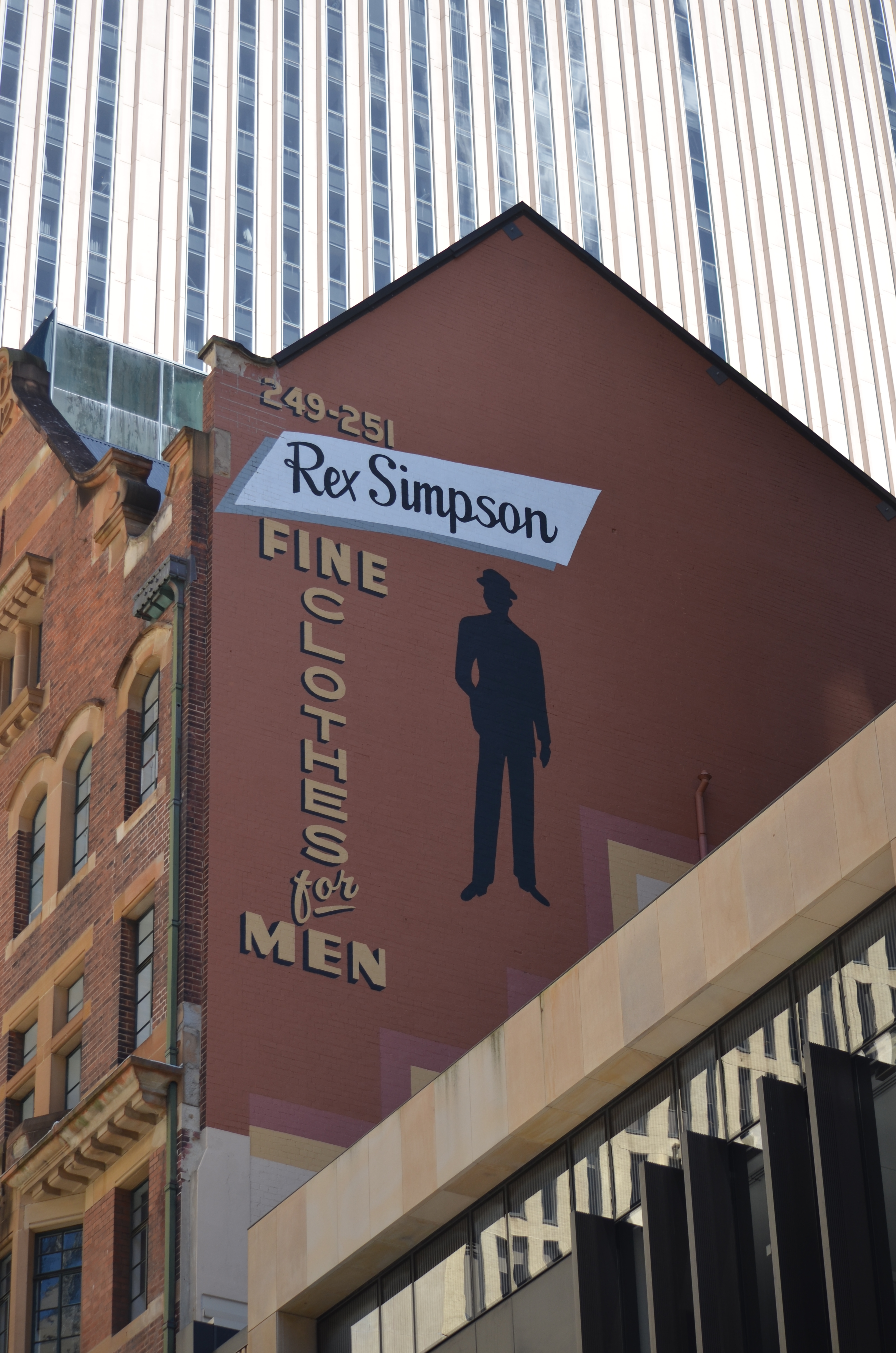
This building at 249-251 Pitt St provided the first office for Australasian Films, a company which played a powerful role in the early years of the Australian film industry, and in doing so served as a focus of the initial Pitt Street film industry precinct.
Following World War Two, Simpson’s menswear occupied the building and Simpson’s painted advertising signs which decorate the north and south elevations.
Happily, the northern sign has recently been restored, although the southern sign is in a faded and rundown condition.

Bushell’s sign in The Rocks
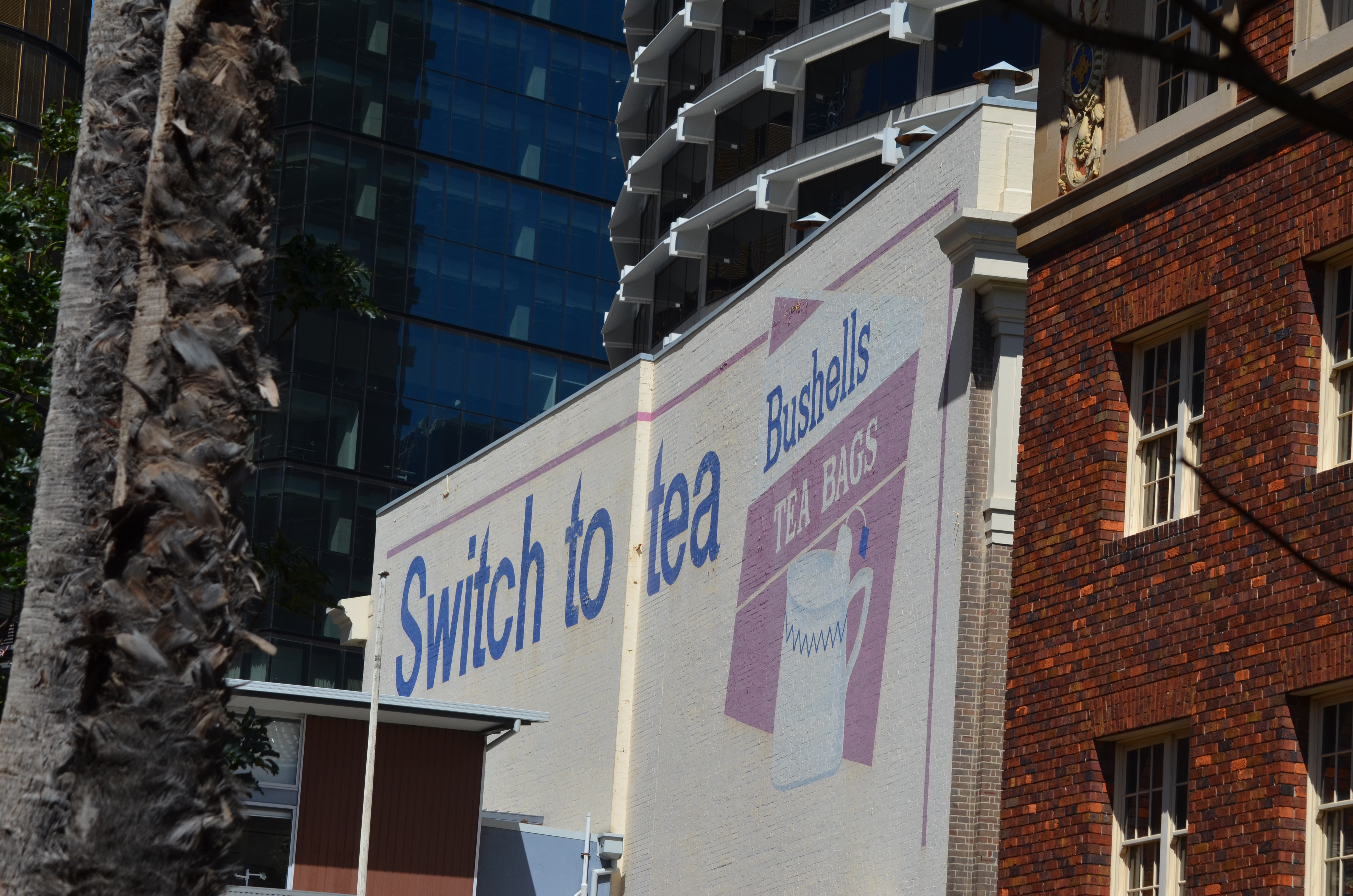
Motorists flashing south off the Sydney Harbour Bridge are able to catch a glimpse of a sign which reads “switch to tea”. This old-school Bushell’s Tea sign looks a little out of place, being on the edge of the city skyscraper zone.
The sign is located on what was previously the Bushell’s warehouse at 121-127 Harrington St, in The Rocks. The site was acquired by Bushells Ltd in March 1920 with the building subsequently being completed and occupied by 1924.
Around 100-150 people worked at the site at any one time, including around 20 people in the printing department, 30 in packing, 17 in tea blending, eight in case making, six in despatch, five maintenance fitters and about 30-40 in administration. A critical function which happened at the building was the tasting and re-blending of tea products.
The sign changed over time. For instance, a 1970 sign referred to “instant tea”, which could be distributed from a jar. The current sign appears around 1975, although at some stage the words “it’s great” disappeared from the sign.
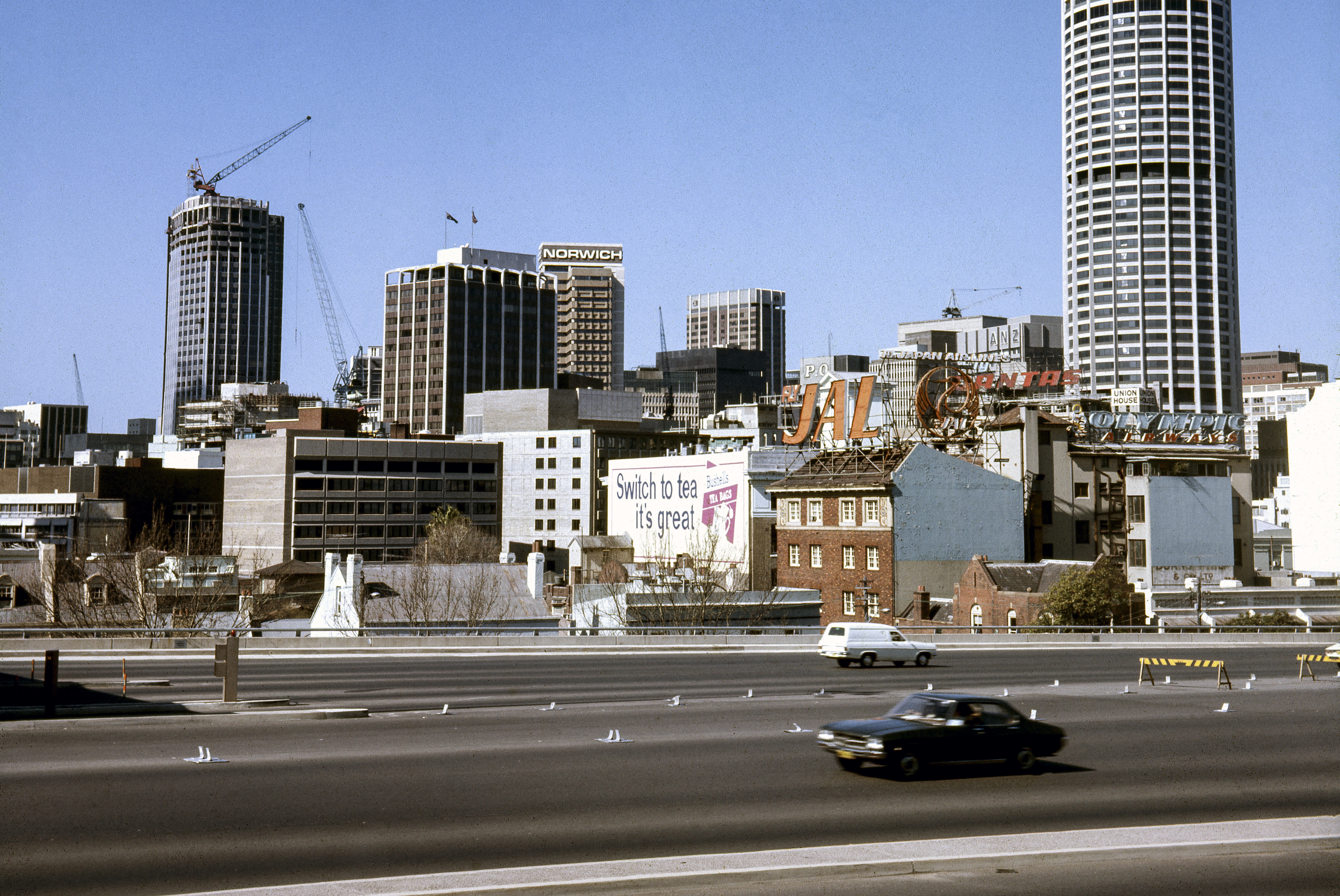

sea of skyscrapers
After the departure of Bushells, the building (and sign) were renovated in the 2000s. The building is now used for office accommodation.
AWA tower
Visitors to Sydney’s Wynyard precinct may be surprised to see what looks like an old-school radio transmission tower, at 45-47 York St.
This tower was in fact erected by Amalgamated Wireless Australia (AWA), which in the 1920s was the first Australian company to manufacture commercial radios.
The AWA building, including its transmission tower, was built as a new headquarters for AWA in York Street in 1939.

The tower was the epitome of the 1930s desire to integrate architecture with technology. It remained the tallest building in Sydney until the 1960s.
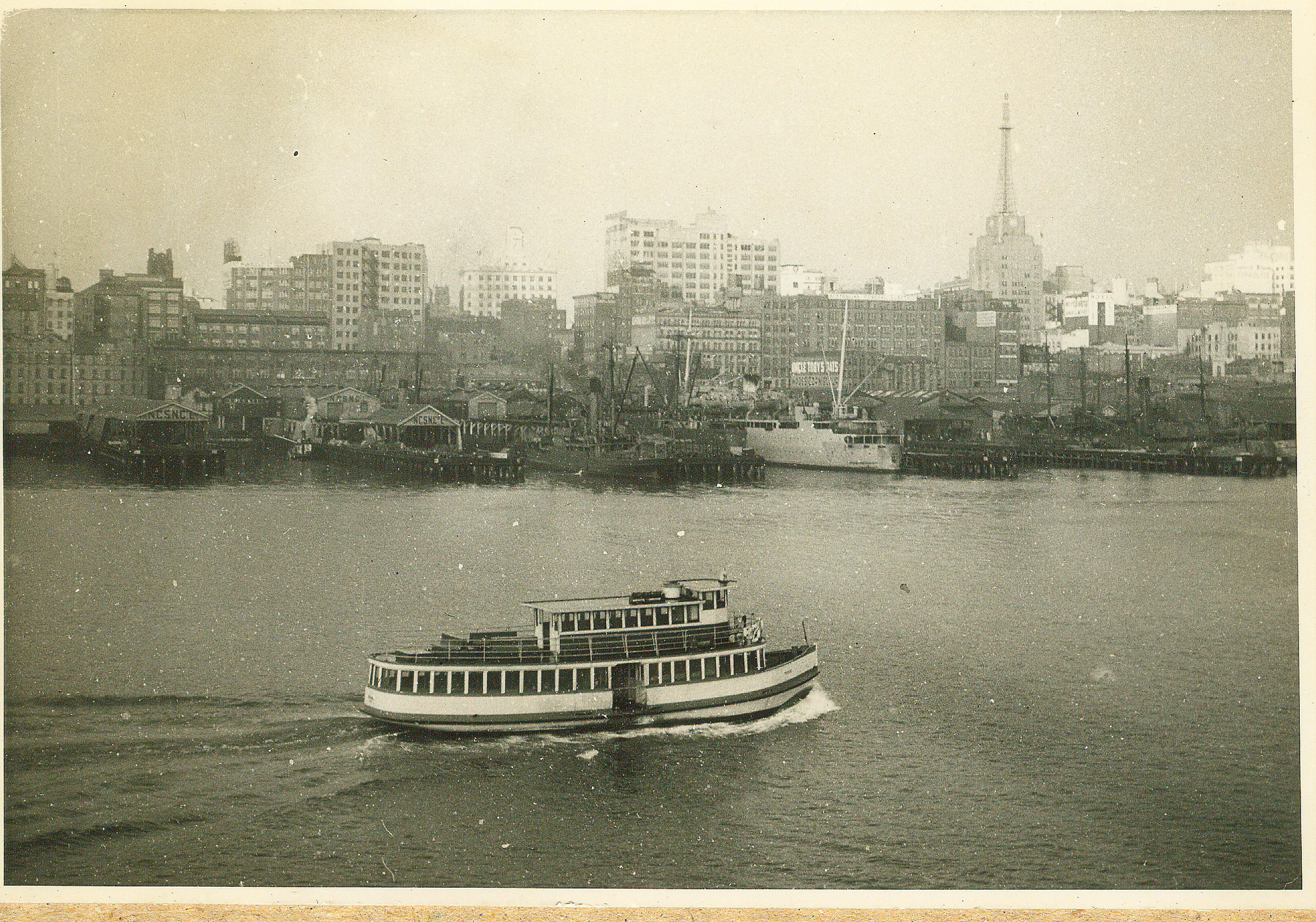
After the firm undertook television manufacturing in the 1960s, large neon logo signs were attached to the building to symbolise this fact. These neon signs have since been removed.
In its later years, the company expanded into a wide range of electronic products, including gaming systems. The company folded in the year 2000.
The tower was demolished and rebuilt in 1994, and by virtue of its heritage protection remains as a permanent reminder of this once great technology company.
Hotel Morris
These are not really ghost signs, as the Hotel Morris is currently in operation, but they do have an interesting back-story.
The Hotel Morris was built in the early 1930s on a narrow site at 412 Pitt St. It was 14 storeys high and contained 100 hotel rooms, and for 34 years was Australia’s tallest hotel.
No doubt the hotel was popular due to its proximity to the Capitol Theatre and Central station, allowing visitors from the country and far-flung Sydney suburbs to enjoy a night in the city.
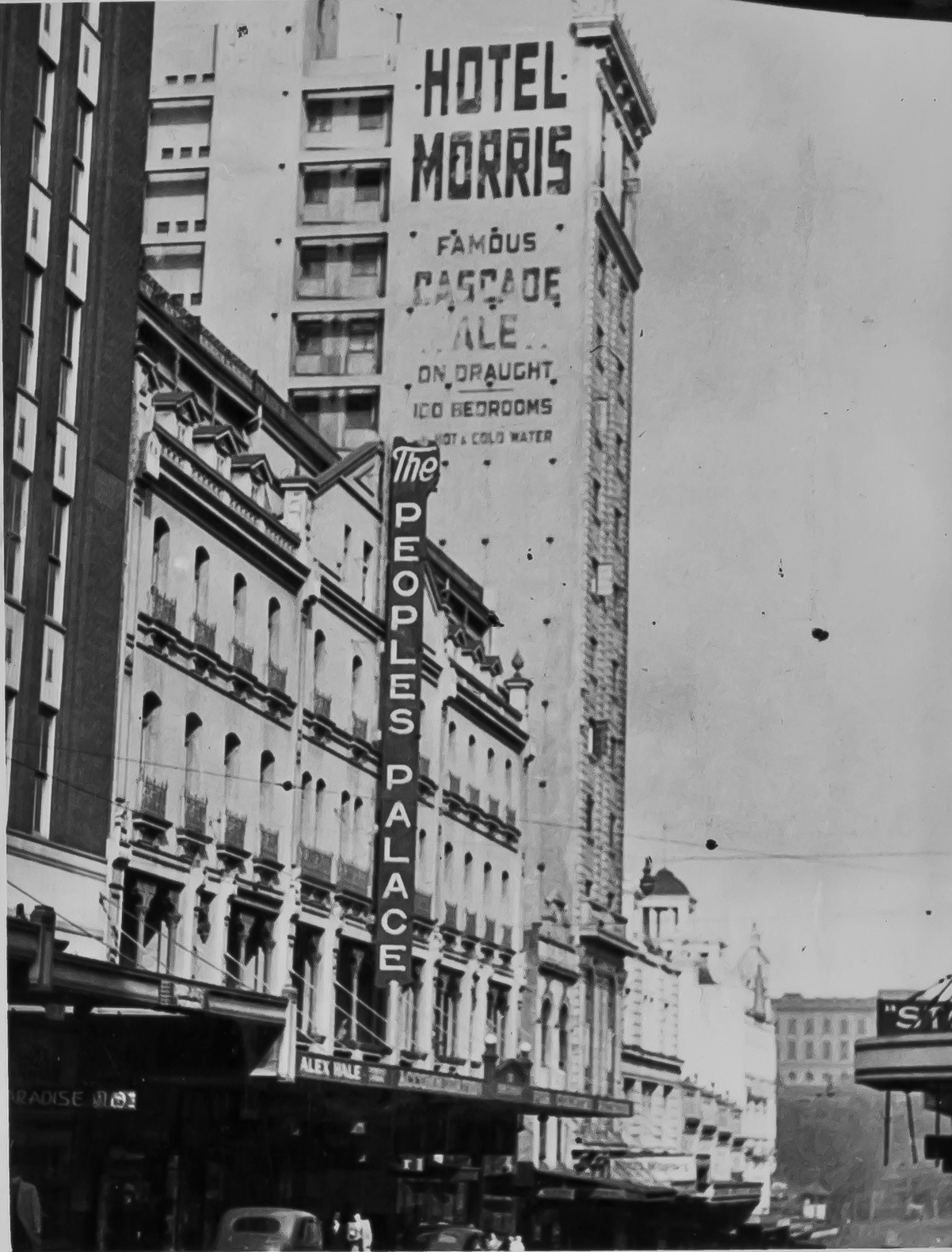
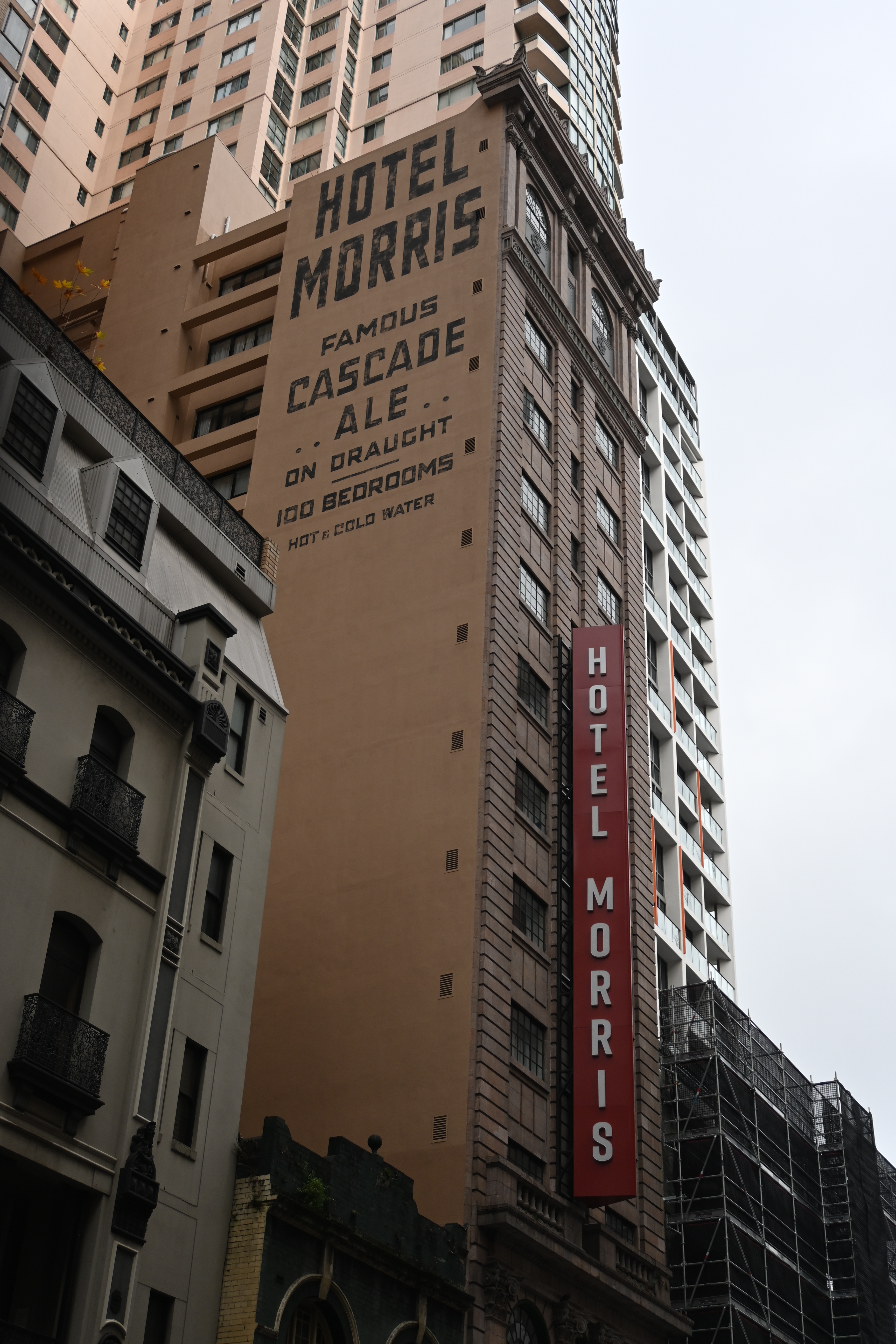
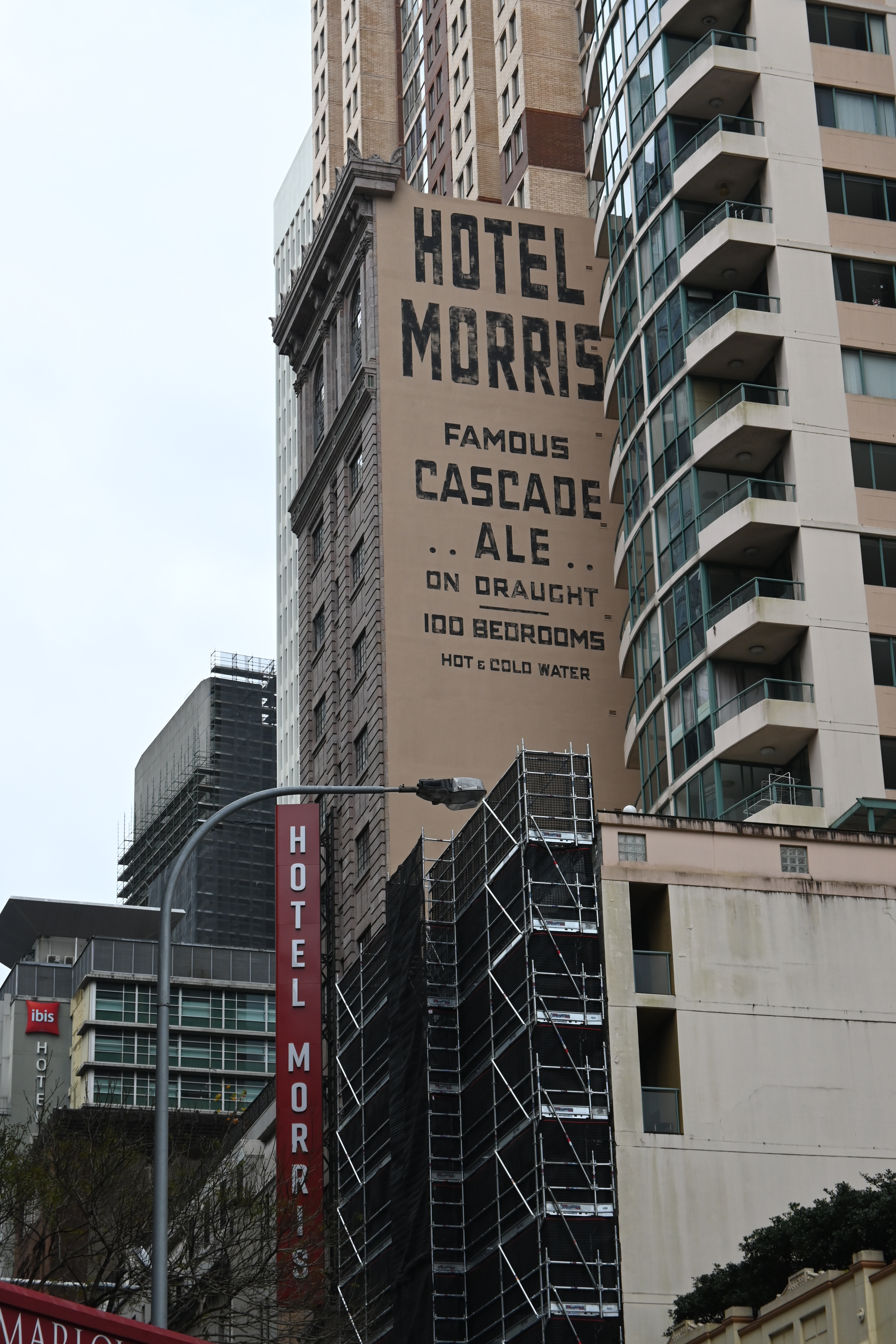
The building is not heritage-listed but does have heritage features, mimicking commercial buildings being constructed in New York and Chicago at the time in what is known as the ‘Inter-War Commercial Palazzo’ style.
For the first twenty years of its life, the Hotel also featured signs on its north and south side walls, with the words “Hotel Morris, Famous Cascade Ale on draught, 100 bedrooms, Hot and Cold Water”.
In the 1950s, the hotel changed its name to the Hotel Bowles, and then the Westend Hotel.
At some stage, the Hotel Morris signs were painted over and replaced with a sign for the Westend Hotel.
With the 2023 renovation and re-opening of the site, and its renaming back to the Hotel Morris, the original Morris signs (as they existed in 1949) have been reinstated to the side walls.
B.J.Ball
Now defunct paper and printing merchant, B.J Ball leased a warehouse at 414-418 Kent St in 1927, later buying the building in the 1950s.. The building was then onsold in 1972, meaning this sign has most likely been a ghost since this time.

The 19th Federation-style warehouse is heritage-listed, which means it is likely this ghost sign will remain in place as long as neighbouring sites are not redeveloped.
Gowings
The Gowings family established a store on the corner of Market and George Sts way back in the 1860s, before constructing a new building in the 1920s.
The store’s longevity means its famous marketing slogan “Gone to Gowings” became part of the Australian vernacular (its meaning became twisted to a reference to something not going well).
However, the store closed in 2006 after years of successive losses and a failed expansion campaign.
The only public reminders of this great retail empire are now two ghost signs on the corner of Market and George Sts.

SEE ALSO: Hidden in plain sight for 53 years: the ghost sign from Sydney’s jazz boom era
Discover more from Changing Sydney
Subscribe to get the latest posts sent to your email.

 Changing Sydney