There was a time when statutory heritage areas and items were like a form of kryptonite to any suggestion of urban renewal.
Any council or government agency investigating a rezoning scheme would consider heritage a clear constraint on development and walk the other way.
However, those times have changed – and in a big way.
Documents released to the NSW Legislative Council – yet to be reported in mass media – show that some 181 hectares of land containing heritage items or areas will be caught up in just one plank of the NSW Government’s Transport Oriented Development (TOD) planning scheme.
That’s an area of Sydney equivalent to the size of Centennial Park (189 hectares).
The figures, prepared by the NSW Department of Planning, Housing and Infrastructure in December 2023, show the North Shore suburb of Killara is most affected by the changes, with 73% of its 278 land parcels within the 400m radius subject to heritage protection.
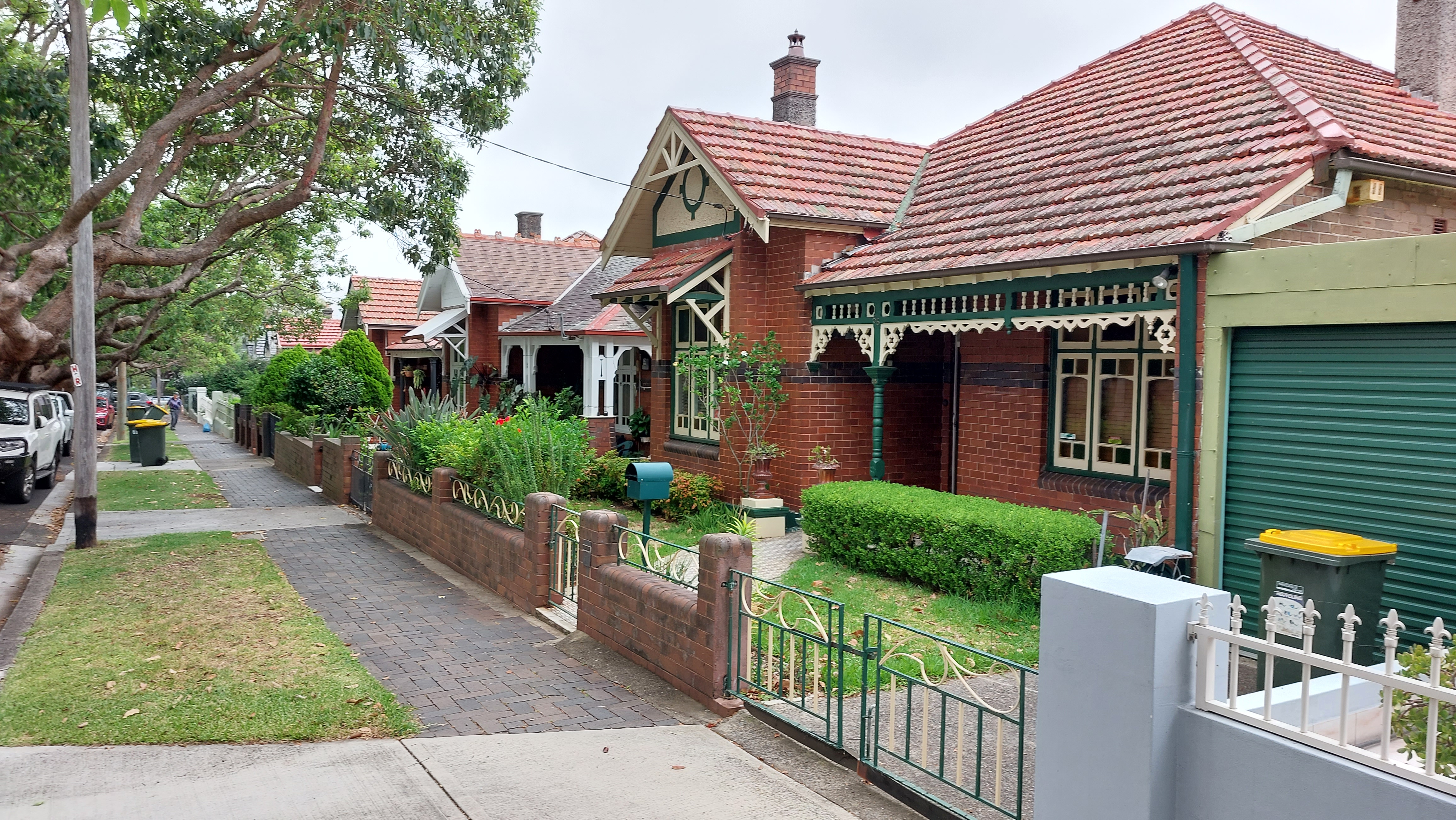
Next on the list is (somewhat surprisingly) the Lake Macquarie outpost of Teralba, where 69% of the 177 lots are protected. Other precincts with high heritage ratios included Gordon (49%), Newcastle Interchange (49%), Croydon (45%) and Roseville (43%).
Here’s the full list below:
| Precinct | Percentage of individual lots within precinct either in heritage conservation area (HCA) or containing a listed item | Percentage of area within precinct either in a HCA or containing a listed item |
| Adamstown | 0% | 0% |
| Ashfield | 33% | 27% |
| Banksia | 1% | 1% |
| Berala | 0% | 5% |
| Booragul | 2% | 15% |
| Canterbury | 2% | 4% |
| Corrimal | 0% | 0% |
| Croydon | 45% | 51% |
| Dapto | 2% | 6% |
| Dulwich Hill | 33% | 34% |
| Gordon | 49% | 46% |
| Gosford | 4% | 5% |
| Hamilton | 30% | 30% |
| Killara | 73% | 66% |
| Kogarah | 11% | 7% |
| Kotara | 0% | 0% |
| Lidcombe | 5% | 13% |
| Lindfield | 27% | 26% |
| Marrickville | 1% | 1% |
| Morisset | 1% | 25% |
| Newcastle Interchange | 49% | 63% |
| North Strathfield | 2% | 96% |
| North Wollongong | 0% | 0% |
| Rockdale | 1% | 4% |
| Roseville | 43% | 36% |
| St Marys | 0% | 0% |
| Teralba | 69% | 70% |
| Tuggerah | 0% | 0% |
| Turella | 0% | 4% |
| Wiley Park | 0% | 2% |
| Wyong | 27% | 17% |
The high impact on heritage has brought on a major community debate – is it possible to deliver for Sydney’s housing needs and retain our heritage?
The National Trust says no.
“If the proposals being put forward go ahead, previous plans to destroy The Rocks will pale into insignificance with the scale of heritage destruction that will be legitimised across NSW.
“The National Trust has calculated that the Transport Oriented Development Program alone will threaten 40 State heritage listed properties and 1,500 locally listed items that are near railway stations.”
Many councils also say no.
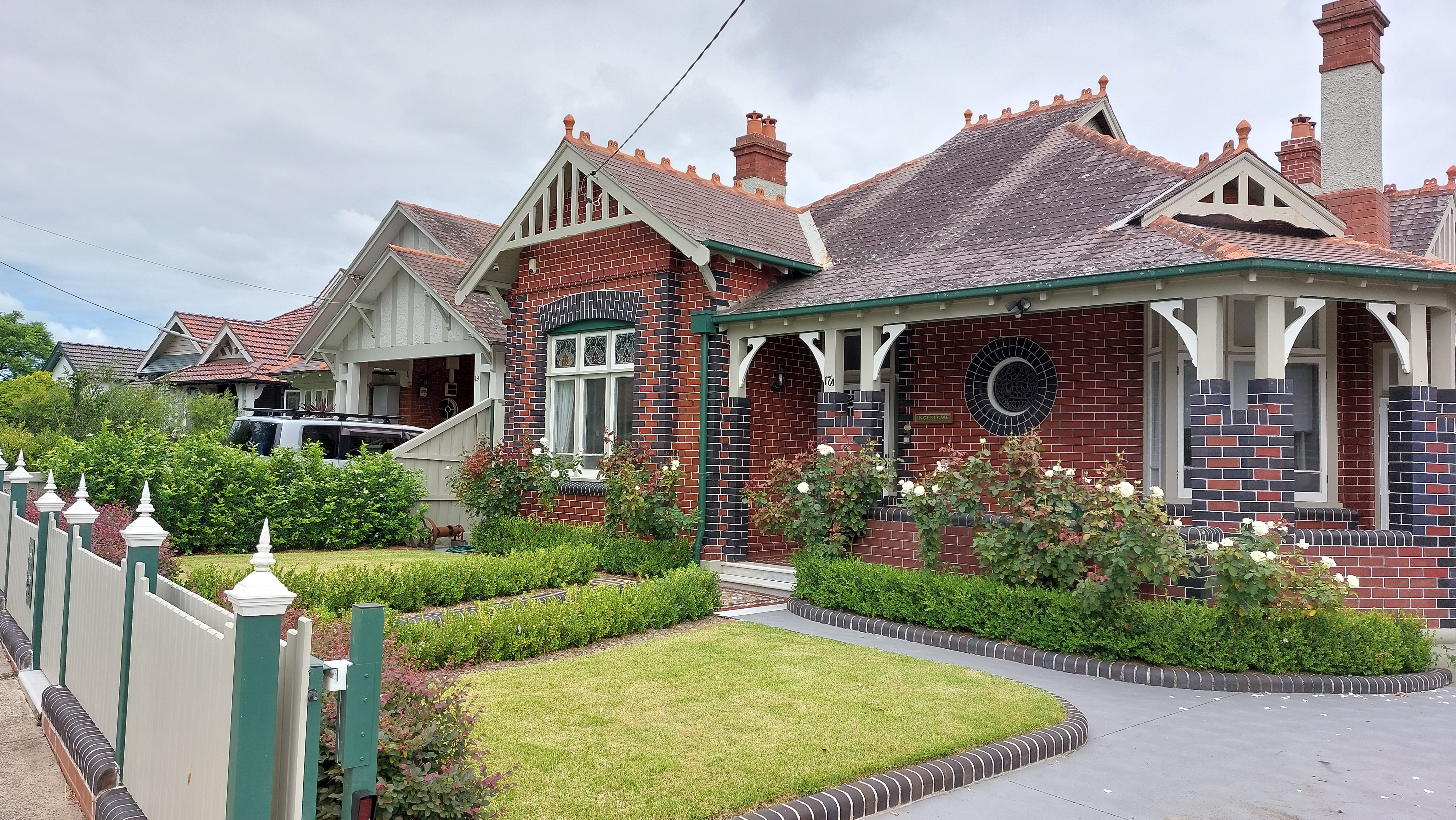
Ku-ring-gai Council’s submission for instance says: “This NSW proposal directly impacts the future conservation of all of Ku-ring-gai’s 46 conservation areas and nearly 900 heritage items. The impact is two-fold by increasing densities that exceed existing built form, and removing Council’s capacity to refuse development that detracts from the heritage significance of listed buildings and their setting.”
The NSW Government says yes, but hasn’t really explained how it is possible to introduce six-storey buildings into heritage conservation areas, and still retain the historic character of the area which led it to be protected in the first place.
It seems to be still grappling with the issue, based on evidence to the 27 February 2024 Budget Estimates committee, where senior Departmental bureaucrat Monica Gibson suggested that some buildings in heritage areas could be removed, and others retained.
“Demolition provisions might say that only non-contributory items could be demolished,” Ms Gibson said.
“Other demolitions would not be allowed. There would be no change to that through the reforms that we are proposing.
“But where a demolition is allowed and encouraged in order to remove something that is not adding to the heritage value of that area, the replacement of that non-contributory item with a well-designed new building—new home—is something that council could definitely assess and consider.”
However, the above scenario would presumably result in six-storey buildings being built on the sites of demolished non-contributory homes, alongside retained single-storey contributory buildings – an unusual outcome. It also provides no certainty for landowners.
FIND OUT MORE: Little house lost: The plan to bury this historic wooden worker’s cottage beneath a $33m tower
NSW is not the only jurisdiction looking at this change.
Wellington City Council in New Zealand has just announced it will be seeking to reduce the city’s ‘character areas’ from 206 hectares to 85 hectares, and de-list 10 buildings, in a bid to turbo-charge housing supply.
In announcing the changes, Wellington City Mayor Tory Whanau said: “We need to accept that we can no longer try to protect the Wellington of the past. We cannot continue to look back at our city’s past with rose tinted glasses. Now is the time to look forward.”
“I do not agree with the view put forward by some that zoning for more housing will not enable more houses to be built and therefore reduce the costs of housing. It simply goes against all logic and the bulk of evidence.”
“I understand that some people value character and heritage buildings. But I believe it is the people that give Poneke (the Maori name for Wellington) its character, and that’s why ultimately, it’s more important to me to make sure Wellington is a place where everyone can afford to live.”
What do you think? Is the proposal to redevelop in heritage areas the right one?
NOTE: The author does not live in a Heritage Conservation Area or heritage item but may be affected by the government’s housing reforms
Discover more from Changing Sydney
Subscribe to get the latest posts sent to your email.

 Changing Sydney
Very interesting article. Yes, there is a shortage of space for new developments. But it should not be at the expense of heritage areas. It’s a bit scary to think they could deem some buildings nonvalue adding to secure rights to use that land. Could a bit of damage to a building or a regulation change on structure compliance force some of these heritage buildings to become “nonvalue adding” with the stroke of a pen.
Not sure that the North Strathfield figures are correct. I checked the heritage map and 2% of lots heritage listed is probably about right, but I think 96% of area is wrong.